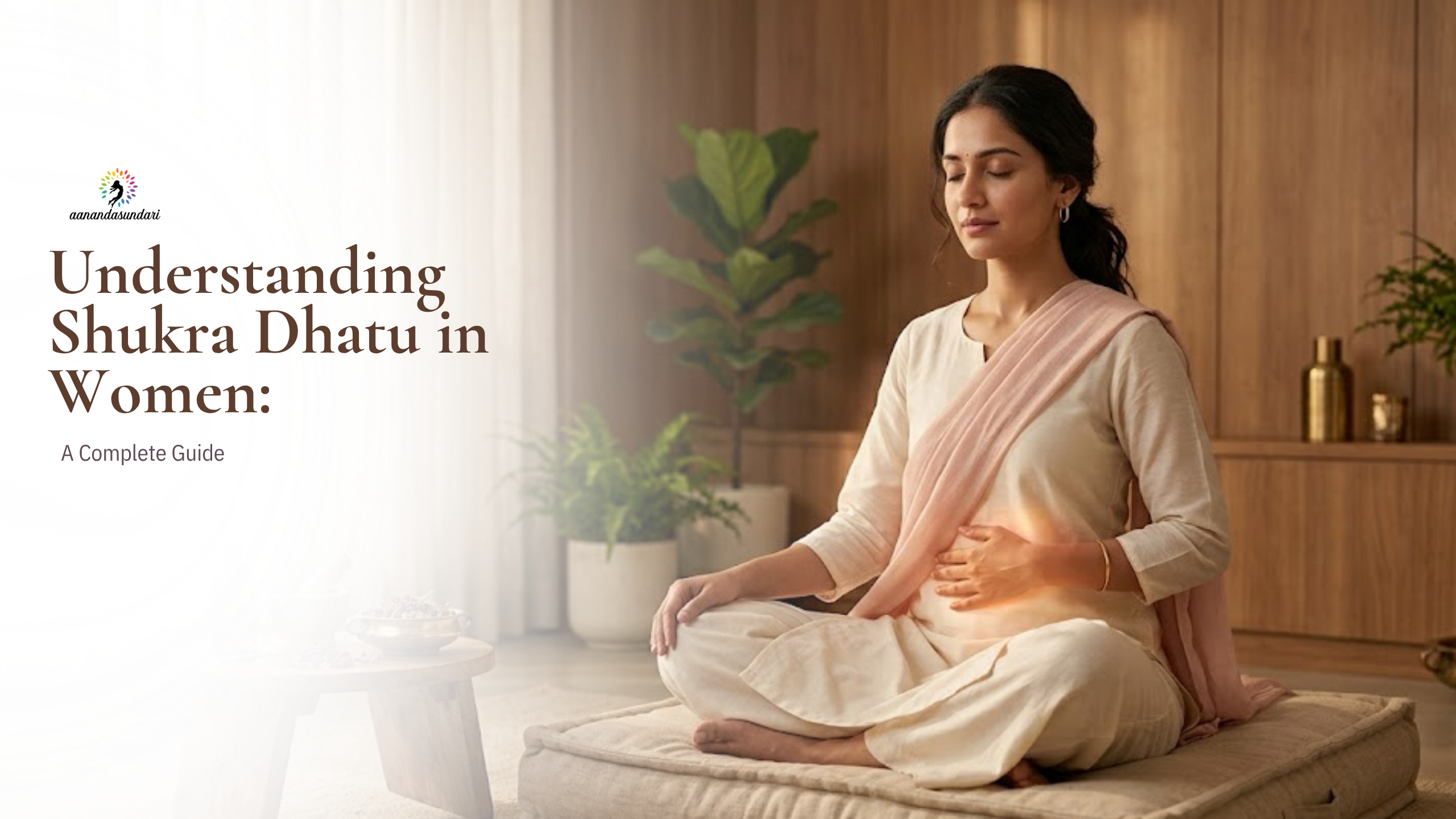
Certain aspects of women’s health have long been whispered about—kept behind curtains of modesty, hesitation, and cultural silence. One such concept is Shukra Dhatu in women. Traditionally associated with male reproductive essence, Shukra Dhatu is often misunderstood, especially when it comes to the feminine body.
But Ayurveda, in its profound wisdom, never intended this knowledge to be gender-restricted.
Aanandasundari, an Ayurvedic clinic, opens up about women’s sexual health and focuses on improving it each day. It provides holistic treatment to increase Shukra Dhatu naturally in women and maintain it.
This guide is an invitation to understand your body more deeply, reconnect with your inner vitality, and gently dissolve the taboo surrounding female reproductive health.
What is Shukra Dhatu?
Ayurveda has described three primary functioning constituents of the human body: dosha, dhatu, and mala. They are compared to tree roots, which are crucial for a tree’s health, much as these three parts are necessary for human health.
The human body is made up of Dhatus, or the basic forms of biological tissues. Here’s a Sapta Dhatu explanation in Ayurved
Dhatus are seven in number, hence the name Sapta Dhatu. They are:
Rasa (plasma)
Rakta (formed blood cells)
Mamsa (muscle tissues)
Meda (fatty tissues)
Asthi (bone tissue)
Majja (bone marrow and nerve tissues)
Shukra (reproductive tissues)
Shukra Dhatu is derived from Majja Dhatu through a transformation process. According to Acharya Sushruta, Shukra Dhatu (Reproductive tissues) exists throughout the body, although it is most prominently located around the bladder.
Shukra Dhatu in Ayurveda is not a physical fluid alone. It is a subtle, vital energy that governs:
Reproductive health
Fertility and conception
Sexual vitality and pleasure
Emotional intimacy and connection
Overall glow, strength, and vitality
It is, in essence, the creative life force within a woman.
Does Shukra Dhatu Exist in Women?
Yes—absolutely.
Ayurveda recognizes that women possess Shukra Dhatu just as men do. However, its expression differs. In women, it is closely linked with Artava Dhatu (the reproductive tissue responsible for menstruation and ovulation), yet it goes beyond it.
Think of it this way:
Artava Dhatu → The physical reproductive aspect (menstrual cycle, ovulation)
Shukra Dhatu → The deeper vitality, fertility potential, and sensual essence
This distinction is important because it shifts the focus from just biological function to holistic feminine wellbeing.
The Role of Shukra Dhatu in Women
Shukra Dhatu plays a deeply nurturing and empowering role in a woman’s body. When balanced, it supports:
Fertility & Reproductive Health
Healthy Shukra Dhatu enhances the body’s natural ability to conceive by nourishing reproductive tissues.
Hormonal Balance
It contributes to stability in hormonal rhythms, influencing menstrual regularity and emotional balance.
Sexual Wellness & Desire
A well-nourished Shukra Dhatu fosters healthy libido, comfort in intimacy, and emotional openness.
Radiance & Glow
That natural glow—clear skin, bright eyes, and a soft aura—is often a reflection of strong Shukra Dhatu.
Emotional Fulfillment
It supports feelings of love, connection, and satisfaction—not just physically, but emotionally.
Signs of Balanced Shukra Dhatu
When your Shukra Dhatu is thriving, your body and mind reflect harmony:
Regular, pain-free menstrual cycles
Healthy libido and comfort with intimacy
Emotional stability and confidence
Glowing skin and lustrous hair
A sense of fulfillment and creative energy
It feels like being at home within yourself.
Signs of Shukra Dhatu Imbalance in Women
Modern lifestyles, stress, poor nutrition, and emotional suppression can disturb this delicate essence.
Physical Signs:
Irregular or painful periods
Low fertility or difficulty conceiving
Vaginal dryness
Fatigue and weakness
Emotional & Mental Signs:
Low libido in women or a lack of interest in intimacy
Feeling disconnected from your body
Emotional numbness or dissatisfaction
Lack of confidence or feminine energy
These are not just “symptoms”—they are messages from your body asking for nourishment and care.
Causes of Shukra Dhatu Imbalance in Women
Understanding the root cause is the first step towards a cure. So here are the causes of imbalance in Shukra Dhatu in women.
Poor Nutrition: Highly processed foods and a lack of essential nutrients weaken tissue formation.
Chronic Stress: Mental exhaustion directly depletes deeper dhatus, including Shukra.
Overexertion: Excessive physical or sexual activity without proper recovery can drain this vital essence.
Emotional Suppression: Unexpressed emotions, especially around intimacy and self-worth, impact feminine vitality deeply.
How to Nourish Shukra Dhatu Naturally?
Healing Shukra Dhatu is not about quick fixes—it’s about gentle, consistent nourishment.
Eat for Deep Nourishment
Include foods that build strength and vitality:
Warm milk with herbs
Ghee and healthy fats
Nuts like almonds and walnuts
Dates, figs, and raisins
Fresh fruits and whole grains
These foods help build the deeper tissues over time.
Embrace Rest & Restoration
Your body rebuilds itself during rest.
Prioritize sleep
Avoid overworking
Allow time for relaxation and stillness
Rest is not laziness—it is rejuvenation.
Support Emotional Expression
Your emotional health is deeply tied to Shukra Dhatu.
Journal your feelings
Practice self-love rituals
Allow yourself to feel without judgment
Healing begins when you stop silencing yourself.
Breaking the Taboo Around Female Vitality
For far too long, women have been taught to disconnect from their bodies—to feel shy, ashamed, or silent about their desires, struggles, and health.
Understanding Shukra Dhatu is more than just learning a concept.
It is about:
Reclaiming your body
Honoring your needs
Embracing your sensuality without guilt
Speaking openly about women’s health
There is nothing inappropriate about understanding your own vitality. In fact, it is one of the most powerful forms of self-awareness.
Final Thoughts
Shukra Dhatu in women is not just about reproduction—it is about creation, connection, and consciousness.
It is your softness and your strength. Your sensitivity and your power. Your ability to nurture life—within and beyond.
When you begin to nourish this essence, you don’t just heal physically—you reconnect with your true feminine energy.
And that, in itself, is a quiet revolution.
Frequently Asked Questions (FAQs)
Is female sexual dysfunction a serious problem?
Female sexual dysfunction is common, but it should not be ignored if it lasts for a long time or causes stress, discomfort, or relationship issues. It is a treatable medical condition, not something to feel ashamed about.
Can female sexual dysfunction go away naturally?
In some cases, temporary issues may improve on their own. But if symptoms continue, proper treatment is needed. With the right approach—lifestyle changes, emotional support, and medical or Ayurvedic care—many women see significant improvement.
Which treatment is better: modern medicine or Ayurveda?
Both approaches have their strengths. Modern medicine focuses on symptom-based treatment, while Ayurveda focuses on root-cause healing and long-term balance. Many women benefit from a combination of both approaches depending on their condition.
Which treatment is better: modern medicine or Ayurveda?
Both approaches have their strengths. Modern medicine focuses on symptom-based treatment, while Ayurveda focuses on root-cause healing and long-term balance. Many women benefit from a combination of both approaches depending on their condition.
When should I consult a doctor for female sexual problems?
You should consult a doctor if you experience low desire, pain during sex, dryness, or lack of satisfaction for several months, especially if it affects your emotional well-being or relationship.