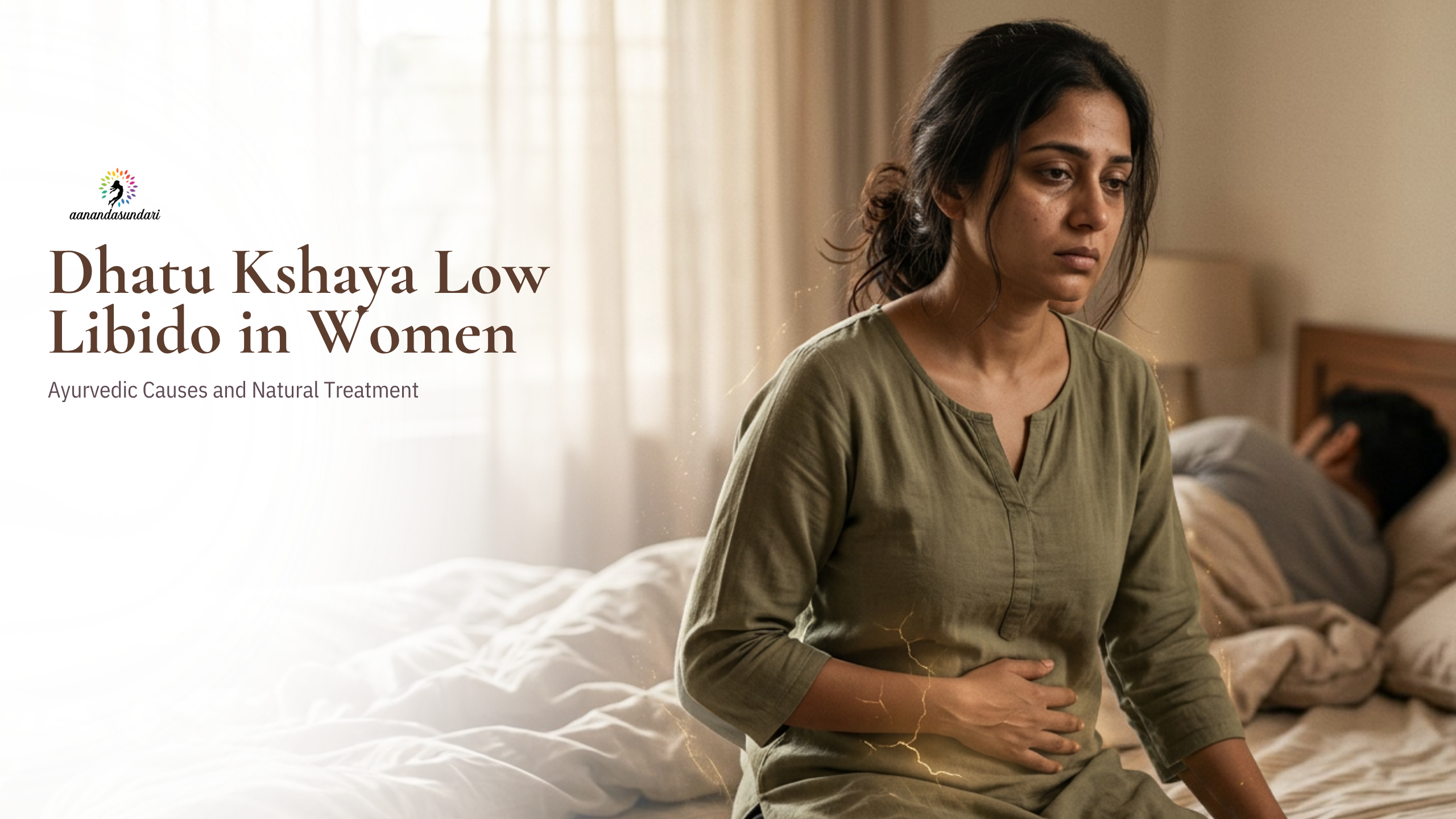
In today’s busy lifestyle, many women experience low sexual desire but often ignore it. It is usually blamed on stress, tiredness, or hormonal changes. But Ayurveda explains this in a deeper way.
According to Ayurveda, Dhatu Kshaya low libido in women is not just a temporary issue. It is a sign that the body is weak, undernourished, or out of balance.
At Aananda Sundari, a women’s Ayurvedic wellness clinic in Bangalore, we believe that female sexual health is an important part of overall well-being. When desire reduces, it is not a flaw — it is your body asking for care.
What is Dhatu Kshaya in Ayurveda?
Dhatu Kshaya means depletion of body tissues. In Ayurveda, the body is made up of 7 Dhatus:
Rasa (plasma)
Rakta (blood)
Mamsa (muscle)
Meda (fat)
Asthi (bone)
Majja (marrow)
Shukra (reproductive tissue)
Each tissue supports the next. When this chain breaks due to stress, poor diet, or illness, it leads to Dhatu Kshaya.
The most important tissue for sexual health is Shukra Dhatu. It controls:
sexual desire
reproductive health
emotional satisfaction
energy and glow
When Shukra Dhatu becomes weak, it leads to low libido in women.
How Dhatu Kshaya Causes Low Libido in Women
Loss of desire is not only a hormonal issue. Ayurveda sees it as a deeper imbalance.
When Shukra Dhatu depletion in women happens:
the body feels tired
the mind feels disconnected
emotional bonding reduces
natural desire slowly fades
This condition is known as Rati Anabhimukhata — lack of interest in intimacy.
Causes of Dhatu Kshaya Low Libido in Women
Understanding the causes of low libido in females Ayurveda helps in treating it properly.
1. Chronic stress
Long-term stress weakens hormones and reduces energy levels.
2. Poor nutrition
Skipping meals or eating processed food reduces nourishment of Dhatus.
3. Overwork and fatigue
Too much work and less rest drains the body.
4. Hormonal imbalance
Irregular periods, thyroid issues, and post-pregnancy changes affect libido.
5. Emotional disconnect
Lack of emotional bonding reduces interest in intimacy.
Symptoms of Shukra Dhatu Kshaya
Common Shukra Dhatu Kshaya symptoms include:
low sexual desire
vaginal dryness
fatigue and weakness
low energy and dull skin
lack of excitement
emotional imbalance
These symptoms are signals that your body needs nourishment.
Ayurvedic Treatment for Low Libido in Women
Ayurveda focuses on root-cause healing, not quick fixes.
1. Nourishing diet
Food plays a major role in rebuilding strength.
Include:
warm, freshly cooked food
milk and ghee
nuts like almonds and walnuts
dates and figs
These foods help build Ojas, which improves vitality and sexual energy.
Ayurvedic herbs for sexual weakness
Common herbs include:
Ashwagandha – improves energy and reduces stress
Shatavari – supports female reproductive health
Safed Musli – boosts vitality
Gokshura – improves strength
These herbs support Ayurvedic treatment for low libido in women naturally.
Stress management
Mental health is directly connected to libido.
Helpful practices:
meditation
yoga
breathing exercises
spending time in nature
Proper rest and routine
sleep 7–8 hours daily
avoid late nights
follow a daily routine (Dinacharya)
The body repairs itself during rest.
Reconnect with your body
Ayurveda encourages natural sensuality:
self-care rituals
oil massage (Abhyanga)
emotional connection with partner
Desire grows when the body feels safe and nourished.
How to Boost Female Libido Naturally
If you want to boost female libido naturally, focus on:
better nutrition
reducing stress
improving sleep
emotional connection
consistent routine
These small steps can create long-term results.
Why Female Sexual Health Matters
Ayurveda believes that a woman’s pleasure is important for overall balance.
When a woman feels healthy:
hormones stay balanced
mind stays calm
relationships improve
overall energy increases
At Aananda Sundari, we focus on restoring this balance through Ayurvedic care and personalized support.
Final Thoughts
Dhatu Kshaya low libido in womenis not permanent. It is a sign that your body needs nourishment and balance.
With the right diet, lifestyle, and Ayurvedic treatment for low libido in women, it is possible to restore energy, desire, and emotional connection.
At Aananda Sundari, we help women reconnect with their natural vitality in a safe, natural, and respectful way.
Frequently Asked Questions (FAQs)
What is Dhatu Kshaya and how can it affect low libido in women?
Dhatu Kshaya means depletion of body tissues in Ayurveda. When this depletion affects Shukra Dhatu, it may reduce sexual desire, energy, emotional connection, and overall vitality in women.
What are the signs of Shukra Dhatu Kshaya in women?
Common Shukra Dhatu Kshaya symptoms may include low sexual desire, vaginal dryness, fatigue, low enthusiasm, reduced glow, and emotional imbalance. These signs suggest the body may need deeper nourishment and rest.
What causes Dhatu Kshaya and loss of sexual desire?
Some common causes of low libido in females Ayurveda highlights are chronic stress, poor nutrition, overwork, hormonal imbalance, and emotional disconnect. Ayurveda sees these as factors that weaken the Dhatus over time.
How does Ayurveda treat low libido caused by Dhatu Kshaya?
Ayurvedic treatment for low libido in women focuses on rebuilding strength from within. This may include nourishing food, Ayurvedic herbs, stress management, proper sleep, daily routine, and self-care practices like Abhyanga.
How can I increase Shukra Dhatu naturally?
Common Ayurvedic herbs for female libido include Ashwagandha, Shatavari, Ginger, and Maca. These herbs support energy, hormonal balance, and reproductive health when used properly.