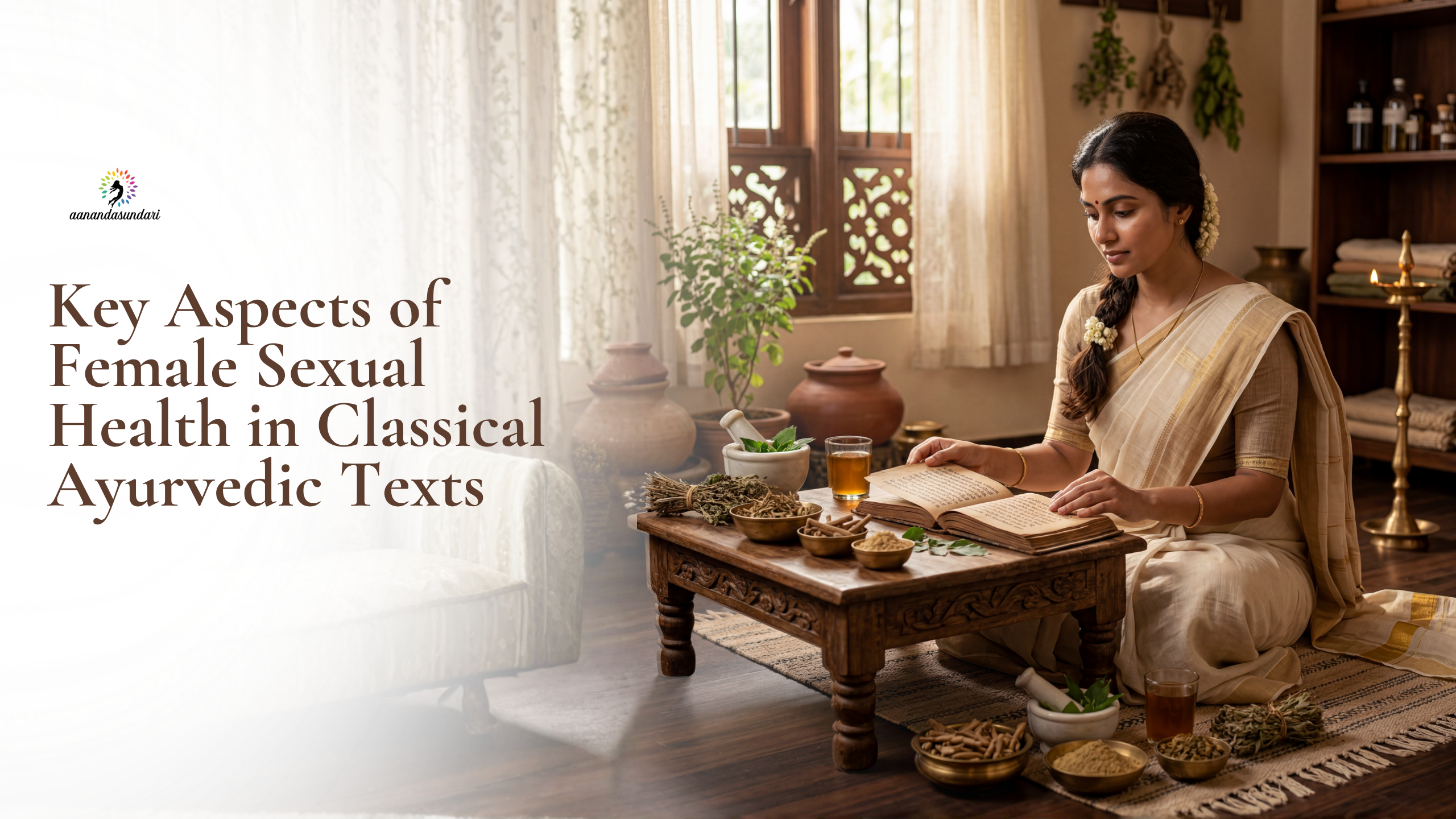
What if female sexual health were not a “topic” to be fixed but a language to be understood? A language spoken through energy, nourishment, rhythm, and emotional depth.
In today’s fast-paced world, women are often encouraged to silence this language, reducing sexual health to hormones, prescriptions, or isolated symptoms. Yet, centuries ago, Ayurveda approached it very differently.
In classical Ayurvedic texts, female sexual health was never segmented. It was seen as a reflection of overall vitality, reproductive strength, mental balance, and spiritual well-being. The ancient sages did not separate desire from digestion, or fertility from emotional health. Instead, they recognized a deeper truth: when the body’s internal intelligence is aligned, female sexual health naturally flourishes.
This is where female sexual health Ayurveda offers a profound and holistic perspective, one that goes beyond symptom management and into the realm of true balance.
Understanding Female Sexual Health in Ayurveda
In Ayurveda, sexual health is governed by the proper functioning of dhatus (body tissues), particularly the reproductive tissue, along with balanced doshas and a strong digestive fire (Agni).
Classical texts like the Charaka Samhita describe reproductive vitality as the essence of all bodily tissues. The final and most refined tissue is known as Shukra Dhatu, which is responsible for reproduction, vitality, and sexual energy.
Shukra Dhatu in Women’s Ayurveda
Although often associated with male physiology, Shukra dhatu in women’s Ayurveda is understood as a subtle reproductive essence present in both sexes. In women, it works in conjunction with Artava Dhatu (the menstrual and ovulatory tissue).
A classical Ayurvedic definition describes Shukra as “Sarva dhatu sara bhutam,” the pure essence of all tissues.
When Shukra Dhatu is healthy and well-nourished, it results in:
Healthy libido
Emotional satisfaction
Reproductive strength
Radiant vitality
On the other hand, depletion of this dhatu may lead to low desire, fatigue, infertility, or lack of fulfillment.
Women’s Reproductive Health in Ayurveda
The concept of women’s reproductive health in Ayurveda extends beyond fertility. It encompasses menstrual health, hormonal balance, emotional well-being, and sexual satisfaction.
Ayurveda identifies three key factors influencing reproductive health
Balanced Doshas
Vata governs movement and is crucial for ovulation and nerve impulses
Pitta regulates metabolism and hormonal transformations
Kapha provides nourishment and stability
Any imbalance in these doshas can disrupt reproductive and sexual health.
Healthy Agni (Digestive Fire)
Proper digestion ensures that nutrients are effectively converted into healthy tissues, including reproductive tissues.
Absence of Ama (Toxins)
Accumulated toxins block bodily channels (srotas), impairing reproductive and sexual functions.
Modern research aligns with these principles, showing that gut health, inflammation, and metabolic disorders significantly impact reproductive health and libido.
Ayurvedic Treatment for Female Sexual Health
The goal of Ayurvedic treatment for female sexual health is not to enhance libido or treat dysfunction, but to restore systemic balance.
Nourishing the Dhatus
Since Shukra Dhatu is the final product of tissue metabolism, treatment focuses on improving overall nourishment through diet and herbs.
Panchakarma Detoxification
Therapies like Basti (medicated enema) and Virechana (purgation) help remove toxins and restore balance in the reproductive system.
Rasayana (Rejuvenation Therapy)
Rasayana herbs and formulations are used to rejuvenate tissues, enhance vitality, and improve longevity.
Mental and Emotional Healing
Ayurveda emphasizes the connection between mind and sexual health. Practices like meditation and mindfulness are integral to treatment.
Ayurvedic Herbs for Female Libido
The Ayurvedic herbs for female libido are not quick stimulants but work by strengthening the body’s natural systems.
Herbs for female libido:
Shatavari: Known as the “queen of herbs” for women, it supports hormonal balance, enhances libido, and nourishes reproductive tissues.
Ashwagandha:An adaptogen that reduces stress and improves energy levels, indirectly supporting sexual health.
Safed Musli: Traditionally used as a natural aphrodisiac to improve vitality and sexual function.
Gokshura:It supports hormonal balance and enhances reproductive health.
Scientific studies have shown that adaptogenic herbs like Ashwagandha can reduce cortisol levels and improve overall well-being, which directly impacts libido and sexual function.
Lifestyle Practices for Sexual Wellness
Ayurveda places significant emphasis on daily habits and lifestyle choices in maintaining sexual health.
Balanced Diet Include warm, nourishing foods, healthy fats, and spices that support digestion.
Stress Management Chronic stress is a major cause of low libido and hormonal imbalance. Practices like yoga and meditation are essential.
Physical Activity Gentle exercises improve circulation and energy flow.
Emotional Well-being Healthy relationships and emotional balance are considered vital for fulfilling sexual health.
Conclusion
Female sexual health is not a problem to be solved; it is a state to be cultivated. Ayurveda teaches us that desire, vitality, and reproductive strength are not isolated functions but expressions of a deeply nourished and balanced life.
In a world that often seeks instant solutions, the Ayurvedic path may seem slow, deliberate, and deeply introspective. Yet, it is precisely this depth that makes it transformative. By nurturing Shukra Dhatu, balancing doshas, and aligning lifestyle with natural rhythms, women can move beyond temporary fixes and rediscover lasting vitality.
Aanadasundari is now combining classical Ayurvedic principles with modern diagnostics to provide personalized care. Our approach includes herbal therapies, detox programs, and lifestyle counseling tailored to individual needs.
The wisdom of Ayurveda reminds us that true sexual health is not just physical; it is emotional, energetic, and profoundly human. And when this balance is restored, it does not merely improve one aspect of life; it elevates the entire experience of being.
Frequently Asked Questions (FAQs)
Why does Ayurveda focus on overall health instead of just treating sexual problems?
In female sexual health Ayurveda, sexual wellness is seen as a reflection of overall body balance. Ayurveda treats digestion, hormones, and emotional health together instead of focusing on symptoms alone.
What is Shukra Dhatu and how does it affect female libido?
Shukra Dhatu in women Ayurveda refers to the reproductive essence responsible for vitality, desire, and fertility. When it is well-nourished, libido and emotional satisfaction improve naturally.
Can poor digestion really affect sexual health?
Yes. According to What is Agni in Ayurveda, weak digestion leads to toxin buildup (Ama), which blocks nutrient absorption and affects reproductive health and libido.
Why do I feel emotionally disconnected even when everything seems physically normal?
Ayurveda connects sexual health with emotional well-being. Stress, anxiety, and mental imbalance can reduce desire even when physical health is normal.
What is the first step to improve female sexual health naturally?
The first step is restoring balance through routine, diet, and stress management. Following Dinacharya Ayurvedic daily routine and mindful lifestyle habits can significantly improve overall and sexual health.