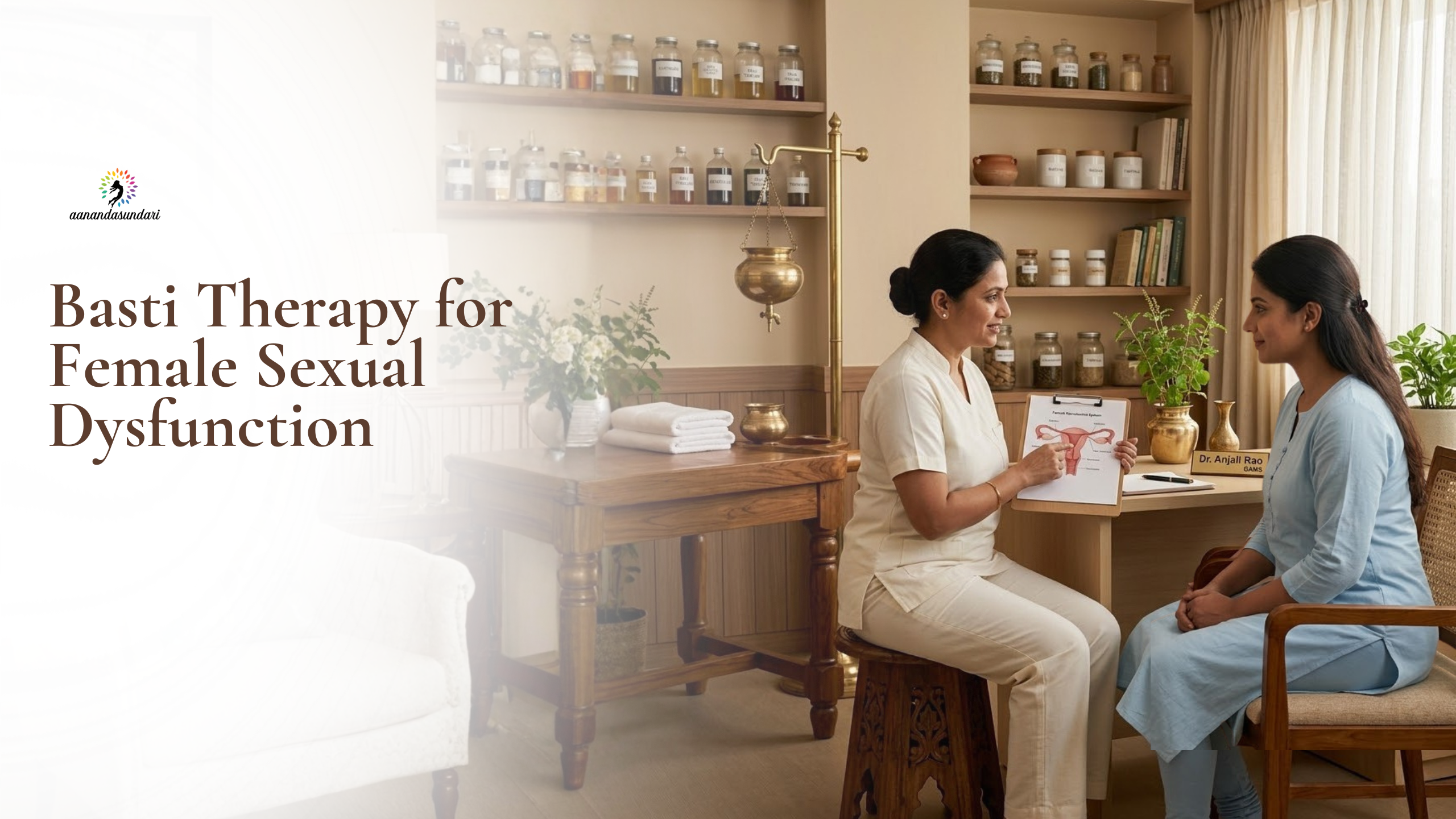
Imagine carrying a burden that affects your most intimate sense of self and being told, again and again, that it’s all in your head. For millions of women globally, female sexual dysfunction (FSD) is exactly that kind of invisible struggle. Low libido, painful intercourse, arousal difficulties, and inability to achieve orgasm are real, physiological, and deeply personal challenges that conventional medicine often dismisses with a prescription or a shrug.
Ayurveda, an ancient science of holistic health, addresses women’s reproductive and sexual health through a precise intervention rooted in understanding the body’s channels and energies. That therapy is known as “Basti” and, specifically, “Uttar Basti” for female sexual dysfunction.
In Ayurveda, Basti is not just a simple enema. It is considered the most potent of the Panchakarma therapies, capable of deeply nourishing tissues, clearing obstructions in the channels (Srotas), and restoring the natural intelligence of the reproductive system.
In this blog, we shall explore the science, tradition, and clinical relevance of Basti therapy for female sexual dysfunction.
Understanding Female Sexual Dysfunction
Female sexual dysfunction is an umbrella term that encompasses a range of persistent, recurrent problems related to sexual response or desire that cause personal distress. According to studies, it affects an estimated 40–45% of women at some point in their lives, making it one of the most prevalent yet underdiagnosed conditions in women’s health.
The major categories include the following:
Hypoactive Sexual Desire Disorder (HSDD): persistent lack of sexual interest or desire
Female Sexual Arousal Disorder (FSAD): difficulty becoming or staying aroused
Orgasmic Disorder: difficulty or inability to reach orgasm
Genitopelvic Pain/Penetration Disorder: pain during intercourse, vaginismus, or vulvodynia
According to Ayurveda, FSD is predominantly a Vata vitiation disorder. Vata dosha governs movement, sensation, and nervous function, which are essential to a healthy sexual response.
When Vata becomes aggravated (due to stress, poor nutrition, hormonal shifts, or emotional trauma), it disrupts the Apana Vayu, the downward-moving sub-dosha that governs the pelvic region, reproductive organs, and sexual function.
This is where Basti therapy steps in.
What is Basti Therapy?
Basti is one of the five core Panchakarma therapies in Ayurveda. The word “Basti” comes from the Sanskrit term for urinary bladder, which was historically used as the container for administering the therapy. In its classical form, Basti involves introducing medicated liquids, herbal decoctions, oils, or milk-based preparations into the body via the anal, urethral, or vaginal route, depending on the therapeutic goal.
There are two primary types relevant to women’s health:
Niruha Basti (Kashaya Basti): a cleansing enema using herbal decoctions that expels toxins (Ama) and pacifies aggravated doshas
Anuvasana Basti: an oil-based Basti that nourishes, lubricates, and rejuvenates the tissues
In the context of female sexual dysfunction, the most therapeutically targeted form is Uttar Basti, which is a specialized type administered directly into the uterus or vagina using medicated oils or herbal preparations. The term ‘Uttar’ means ‘upper’ or ‘superior,’ referring to both its route of administration and its elevated potency.
Uttar Basti benefits for women are extensive and well-documented in classical Ayurvedic texts, including the Ashtanga Hridayam and Charaka Samhita. It is specifically indicated for Yoni Vyapads (vaginal and uterine disorders), infertility, dysmenorrhea, vaginal dryness, and conditions affecting female libido and arousal.
How Basti Therapy Works for Female Sexual Dysfunction
The mechanism of Uttar Basti is multi-dimensional. Here is how it targets the various contributors to female sexual dysfunction.
Pacifying Apana Vata
Apana Vata, the downward-moving force, predominates in the lower abdomen and pelvic floor. It governs menstruation, ovulation, sexual arousal, and the experience of pleasure. Uttar Basti directly nourishes and pacifies Apana Vata, restoring its normal downward flow. This leads to improved lubrication, heightened sensitivity, and a restored sense of pleasure.
Nourishing the Shukra Dhatu
In Ayurveda, “Shukra Dhatu” refers to the reproductive tissue in both males and females. Female Shukra is responsible for libido, fertile capacity, and sexual vitality. Medicated oils used in Uttar Basti, such as Shatavari Ghrita, Ashwagandha Taila, and Ksheerabala Taila, directly nourish the Shukra Dhatu, addressing low libido at its root, not just as a symptom.
Clearing Obstruction in Artava Vata Srotas
The Artava Vaha Srotas are the channels carrying reproductive fluids and energies in women. Blockages in these channels, caused by accumulated ama (undigested toxins), emotional stress, or hormonal imbalances, lead to dryness, pain, and lack of arousal. Niruha Basti works to dissolve and flush these blockages, while Uttar Basti delivers therapeutic substances directly to the site.
Regulating the Neuro-Endocrine Axis
Modern research suggests that Ayurvedic herbs used in Basti formulations, particularly Shatavari (Asparagus racemosus), Ashwagandha (Withania somnifera), and Bala (Sida cordifolia), act on the hypothalamic-pituitary-ovarian (HPO) axis. They help balance estrogen and progesterone levels, support adrenal function, and modulate the stress response, all of which directly influence sexual desire and function.
Improving Pelvic Blood Circulation
The warm, medicated oils used in Uttar Basti promote vasodilation and improve circulation in the pelvic region. Better blood flow to the vaginal walls, clitoris, and uterus enhances arousal response, natural lubrication, and sensitivity, directly addressing Female Sexual Arousal Disorder.
The Uttar Basti Protocol
Uttar Basti for female sexual dysfunction is not a one-size-fits-all treatment. A qualified Ayurvedic physician will assess your Prakriti (constitution), Vikriti (current imbalance), and specific presentations before designing a personalized protocol. That said, here is a general overview of what the therapy typically involves:
Phase
Duration
What Happens
Purvakarma (Pre-procedure)
3-5 days
Snehana (internal oleation with medicated ghee) and Swedana (steam therapy) to loosen Ama and prepare the tissues
Uttar Basti Administration
3-7 days
Medicated oil or ghee is introduced into the vaginal canal or uterine cavity via a sterile catheter. The procedure takes 15–20 minutes and is generally painless
Paschat Karma (Post-procedure)
7-14 days
Dietary restrictions, herbal supplements, rest, and light Yoga or Pranayama to consolidate the therapeutic effect
Follow-up cycles
As advised
Repeat courses at monthly intervals (often timed with the menstrual cycle) are recommended for chronic conditions
Ayurvedic Treatment for Female Sexual Dysfunction
Basti therapy does not work in isolation. For the best outcomes, it is integrated into a broader Ayurvedic treatment for female sexual dysfunction that may include:
Rasayana herbs like Shatavari, Ashwagandha, and Amalaki to rebuild Shukra Dhatu and overall vitality
Female libido Ayurveda treatment protocols using herbo-mineral formulations such as Stri Rasayana and Pushyanuga Churna
Dinacharya (daily routine) modifications to support Vata balance, regular sleep, warm foods, and oil massage (Abhyanga)
Psychological support through Sattvavajaya Chikitsa (Ayurvedic mind-therapy) for trauma-related or stress-induced FSD
Yoga and Pranayama practices are specifically beneficial for pelvic health, including Malasana, Baddha Konasana, Mula Bandha, and Nadi Shodhana
This integrated approach addresses not just the symptom, reduced desire or pain, but the full ecosystem of factors: hormonal, neurological, emotional, and energetic.
Conclusion
Female sexual dysfunction is not a character flaw, a weakness, or something to simply “push through.” It is a health condition, often with deep physiological roots, that deserves thoughtful, evidence-informed, and compassionate care.
Basti therapy for female sexual dysfunction, particularly in the form of Uttar Basti, offers something that many modern treatments do not: a direct, targeted intervention that nourishes the reproductive tissues from within, restores hormonal balance, clears energetic and physical blockages, and reconnects a woman to her body’s natural capacity for pleasure and vitality.
This is not mysticism. This is a deeply systematized medical tradition backed by thousands of years of clinical observation, and increasingly, by modern research. As integrative medicine continues to grow, Basti therapy’s role in women’s reproductive and sexual health is poised for well-deserved recognition.
If you or someone you love is navigating the quiet suffering of female sexual dysfunction, know that Ayurveda sees you, wholly, specifically, and with remarkable therapeutic depth. A consultation with a qualified Ayurvedic practitioner at Aanandasundari to explore whether Uttar Basti or a broader Panchakarma protocol is right for you may just be the most important health conversation you have this year.
Frequently Asked Questions (FAQs)
What is Basti therapy for female sexual dysfunction?
Basti therapy for female sexual dysfunction is an Ayurvedic treatment that uses medicated oils or herbal preparations to balance Vata, improve lubrication, and restore reproductive health.
How does Uttar Basti improve female sexual health?
Uttar Basti works by nourishing reproductive tissues, improving blood circulation, and balancing hormones, which helps with libido, arousal, and pain during intimacy.
Is Basti therapy safe for women?
Yes, when performed by a qualified Ayurvedic doctor, Basti therapy is considered safe and is customized based on body type, health condition, and hormonal status.
Can Basti therapy help with low libido and dryness?
Yes. Basti therapy helps improve natural lubrication, reduce dryness, and enhance sensitivity by nourishing tissues and balancing Apana Vata.
How many sessions of Basti therapy are needed?
The number of sessions depends on the severity of female sexual dysfunction, lifestyle factors, and individual health. Most treatments are done in cycles under medical guidance.