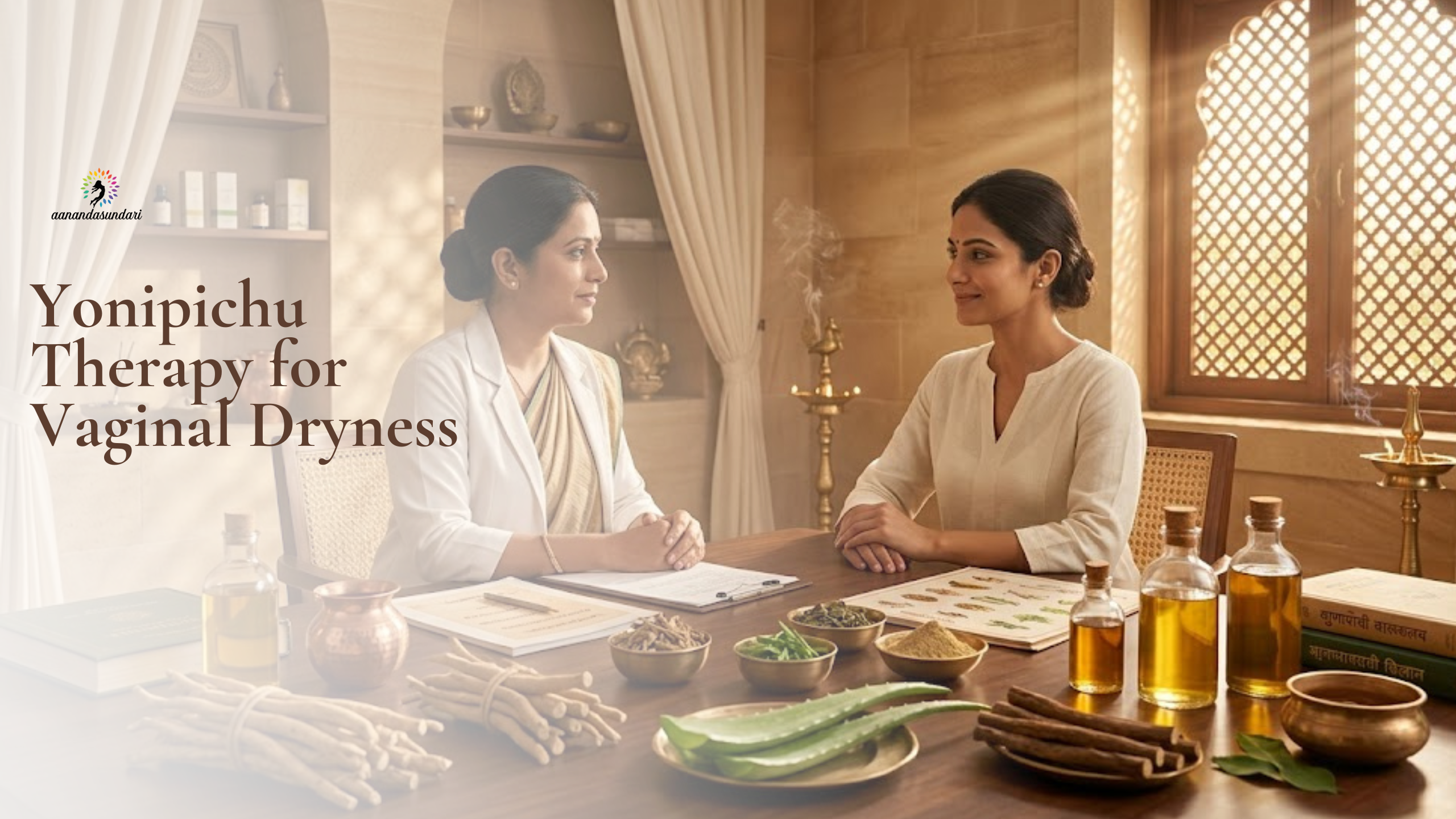
A mother of two and a working woman had never felt her body respond to anything anytime before. In her mid-thirties, her body started feeling subtly unfamiliar. The sleep that once came easily started to feel lighter. The energy that carried her through the day now ran dry by afternoon. The skin that bounced back with barely any effort now told a different story. Her body was changing, and it was asking for a different kind of attention.
At Aanandasundari, we meet women at exactly this turning point every day. What we offer them is not another supplement to add to a cluttered shelf or a crash protocol borrowed from the internet. We offer something far older, far wiser, and remarkably personalised: Rasayana therapy for women, a cornerstone of classical Ayurvedic medicine that has nurtured feminine vitality for over 5,000 years.
Why Do Women Feel Different After 35?
The shift that women feel after 35 is not imaginary, nor is it simply “stress.” It is deeply biological, hormonal, and cellular. Ayurveda recognised this long before modern endocrinology put a name to it.
In Ayurvedic philosophy, a woman’s life is divided into doshic phases. The Pitta phase, which governs ambition, transformation, and metabolic intensity, runs roughly from puberty through the late thirties. As this phase begins to transition toward the Vata phase, characterised by dryness, lightness, and movement, the body undergoes a profound internal reorganisation.
Simultaneously, modern science confirms what Ayurvedic practitioners have observed for centuries. A 2022 study published in Cell Metabolism found that women experience two significant acceleration points in biological aging: once around the age of 34 and again around 60. Cellular processes related to metabolism, immune function, and tissue regeneration all begin to shift during this window.
What women often feel as fatigue, brain fog, mood fluctuations, and changes in skin texture are not signs of deterioration. They are signals. The body is communicating that its needs have changed, and that the nourishment and rhythm it requires now is different from what worked at 25.
Why 35 is a Hormonal Turning Point
The word “perimenopause” tends to conjure images of women in their late forties. But the truth is that the hormonal reorientation begins much earlier, sometimes as early as the mid-thirties.
Estrogen and progesterone do not drop off a cliff overnight. Instead, they begin a gradual, undulating recalibration. Progesterone tends to decline first, often causing shorter cycles, lighter sleep, increased anxiety, and a general sense of emotional sensitivity. Estrogen fluctuates irregularly, creating moments of sudden fatigue, hot flushes, or brain fog even while periods remain regular.
The thyroid, adrenal glands, and insulin sensitivity are also affected during this phase. A 2021 review in the Journal of Clinical Endocrinology and Metabolism noted that thyroid dysfunction is significantly more prevalent in women over 35, often presenting subtly as fatigue, hair thinning, and unexplained weight gain, symptoms that are routinely dismissed or misattributed.
Cortisol dysregulation during this phase is another underappreciated contributor. Women in their mid-to-late thirties who carry high stress loads often experience accelerated depletion of Ojas, the Ayurvedic concept of vital essence, which governs immunity, reproductive health, skin luminosity, and mental clarity.
This is precisely the window in which anti-aging Ayurveda for women proves most transformative, not as a reaction to crisis, but as a proactive, intelligent recalibration.
What Happens If You Don’t Act?
Ayurveda is, above all, a medicine of prevention. The question it always asks is, “What is the cost of inaction?”
If the signals your body sends after 35 are ignored or suppressed rather than listened to and addressed, the consequences tend to compound over time. Here is a simplified overview of what neglecting this transition can mean:
What Gets Ignored
Short-Term Impact
Long-Term Consequence
Hormonal fluctuation
Mood swings, poor sleep
Accelerated bone density loss, cardiovascular risk
Ojas depletion
Fatigue, low immunity
Chronic inflammation, autoimmune conditions
Digestive weakening (Agni)
Bloating, irregular appetite
Nutrient malabsorption, skin dullness
Vata imbalance
Anxiety, dryness, forgetfulness
Early cognitive decline, joint degeneration
Neglected Rasayana window
Missed cellular renewal opportunity
Faster visible and biological ageing
The Charaka Samhita, Ayurveda’s foundational classical text, describes the consequence of neglecting rasayana therapy for women practices in midlife as a progressive loss of Bala (strength), Medha (intelligence), Varna (skin quality), and Ayu (life span quality). These are not metaphors. They map directly onto what modern medicine would describe as accelerated aging markers.
Important Herbs for Women After 35
Rasayana herbs for women are not general wellness supplements. They are deeply specific, adaptogenic, and tissue-targeting medicines. Below is a curated overview of the most clinically relevant herbs in the Rasayana category for women navigating the post-35 phase.
Herb
Primary Action
Key Benefit for Women over 35
Shatavri
Hormonal nourishment
Regulates estrogen, supports libido, and improves mood
Ashwagandha
Adaptogenic, Vata-calming
Reduces cortisol, improves sleep, and improves energy
Amalaki
Cellular rejuvenation
Richest natural source of vitamin C, collagen support
Guduchi
Immune modulation
Reduces chronic inflammation, supports the liver
Brahmi
Neurological tonic
Improves memory, reduces anxiety, and brain fog
Lodhra
Uterine tonic
Supports reproductive tissue health
Shankhpushpi
Mentak Rasayana
Calms the nervous system, enhances emotional resilience
Each of these herbs works differently depending on a woman’s Prakriti (constitutional type), current Vikriti (imbalance state), and specific symptom picture. This is why Rasayana therapy is never a one-size-fits-all prescription; it is always a carefully crafted, personalised protocol.
The Ayurvedic daily routine for women’s health that accompanies herbal therapy, including specific meal timing, Abhyanga (self-massage with medicated oils), appropriate exercise, and seasonal adjustments, is equally critical. Herbs work far more powerfully when the lifestyle that surrounds them is aligned.
Shatavari: The Queen of Female Wellness
No discussion of Rasayana therapy for women is complete without giving Shatavari the space she deserves.
Her very name tells the story. “Shatavari” translates from Sanskrit as “she who possesses a hundred husbands,” a poetic reference to her extraordinary capacity to nourish, strengthen, and sustain female vitality across every stage of a woman’s life. In classical Ayurvedic texts, she is considered the preeminent stri rasayana, the rejuvenative herb for women above all others.
Shatavari benefits for women over 35:
System
Shatavari’s Action
Hormonal
Phytoestrogenic balancing
Immune
Immunomodulatory, adaptogenic
Nervous system
Anxiolytic, anti-stress
Reproductive tissue
Tones the uterine and ovarian tissue
Digestive
Soothes gut lining, reduces acidity
Skin and hair
Improves moisture retention, reduces dryness
A Gentle Word Before You Begin
Rasayana therapy for women is not a quick fix, and it was never designed to be one. It is a commitment to slowness, to rhythm, to listening to the body with a quality of attention that modern life rarely rewards. The women who walk into our clinic often arrive carrying years of ignoring their own signals. What they discover through Rasayana is not just better health but also a restored relationship with their own bodies.
At Aanandasundari, every Rasayana protocol begins with a thorough Ayurvedic consultation, an assessment of your Prakriti, your Vikriti, your digestive strength, your stress patterns, and your life phase. From this foundation, a personalised protocol is crafted: the right herbs, the right formulations, the right daily rhythm, and the right seasonal adjustments.
You are not too early to begin, and you are certainly not too late. The mid-thirties is not a decline; it is an invitation. An invitation to know your body more deeply, nourish it more wisely, and step into the second half of your vitality with intention and grace.
Come and begin your Rasayana journey with us. Your body has been waiting for exactly this.