When a woman walks into a clinic feeling disconnected from her own body, low desire, discomfort during intimacy, and emotional withdrawal, she often wonders if something is “wrong” with her. The truth is, female sexual dysfunction is far more common than most people talk about, and it is far more treatable than most people realise.
At Aanandasundari, Bangalore, we approach this sensitive concern not with a quick prescription but with a thorough, personalised diagnostic process rooted in over 5,000 years of Ayurvedic wisdom. This blog walks you through exactly how that process works step-by-step.
What Is Female Sexual Dysfunction Through an Ayurvedic Lens?
Modern medicine defines female sexual dysfunction (FSD) as a persistent problem with sexual desire, arousal, orgasm, or pain during intercourse. Ayurveda, however, goes deeper. It does not see FSD as an isolated condition; it sees it as a signal that the body’s inner ecosystem is out of balance.
In Ayurvedic texts, sexual health in women is governed primarily by Shukra Dhatu (reproductive tissue), Ojas (vital essence and immunity), and the interplay of the three Doshas, Vata, Pitta, and Kapha. When these are disturbed by stress, poor diet, hormonal shifts, trauma, or lifestyle, a woman’s capacity for pleasure, connection, and reproductive wellness gets compromised.
This is why Ayurvedic treatment for female sexual dysfunction never follows a one-size-fits-all approach. It begins with a diagnosis.
Step 1: Initial Consultation and Case History
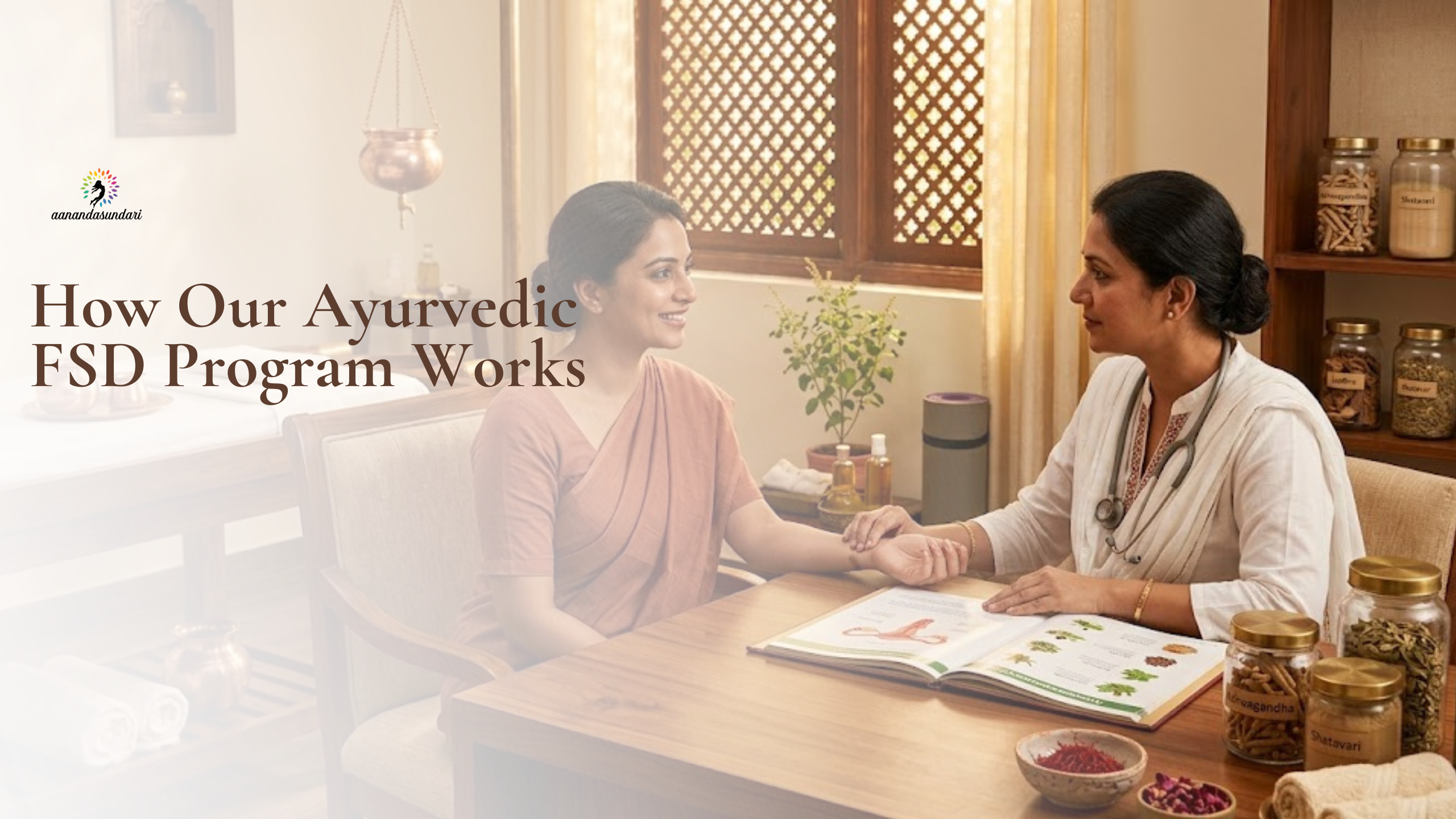
The first step in how Ayurvedic consultation works for women is a detailed, judgment-free conversation. At Aanandasundari, our practitioners spend anywhere from 45 minutes to an hour with the patient during the first visit.
The consultation covers:
Area of Inquiry
What It Reveals
Menstrual history & cycle regularity
Hormonal balance, Pitta/Vata imbalance
Sleep patterns & energy levels
Ojas depletion, Vata dominance
Digestive health & appetite
Agni (digestive fire) strength
Emotional history & stress levels
Mind-body connection, Prana Vata
Diet, lifestyle & daily routine
Root causes of Dosha aggravation
Relationship dynamics
Psychological contributors to FSD
Past medical or gynaecological history
Structural or hormonal factors
This is not just data collection; it is a compassionate dialogue. Many women find relief simply in being heard without shame or haste.
Every woman is born with a unique Prakriti, her natural dosha constitution. Understanding this is the backbone of Ayurvedic diagnosis for female sexual dysfunction in Bangalore and anywhere else.
A Vata-dominant woman may experience dryness, anxiety, and low libido.
A Pitta-dominant woman might deal with inflammation, hyperacidity, or emotional irritability that dampens intimacy.
A Kapha-dominant woman could face lethargy, weight issues, and emotional withdrawal.
Knowing the Prakriti helps the practitioner understand not just what is happening but why, and that distinction makes all the difference in treatment.
Step 3: Vikriti Analysis (Current State of Imbalance)
While Prakriti is your baseline, Vikriti is your current state, and the two are often different. A woman born with a Pitta constitution may be currently suffering from a Vata aggravation due to chronic stress or sleeplessness.
The practitioner uses pulse diagnosis (Nadi Pariksha), tongue examination, eye observation, and physical assessment to determine the Vikriti. These traditional diagnostic tools reveal imbalances at a subtle level, often before they manifest as fully formed symptoms.
Step 4: Evaluation of Agni and Ama
Agni (digestive fire) and Ama (toxic residue from poor digestion) play a critical but often overlooked role in sexual health. When digestion is weak, nutrients do not reach the deeper tissues, including Shukra Dhatu, the reproductive tissue responsible for vitality and desire.
Signs of Ama accumulation, coating on the tongue, heaviness, brain fog, and dull skin are carefully noted. Treating the root of poor digestion is often the first step before any targeted Ayurvedic treatment for female sexual dysfunction is prescribed.
Step 5: Personalised Treatment Planning
Once the full diagnostic picture is clear, the practitioner creates a customised treatment protocol. This typically includes a combination of:
This is not a 7-day fix. Ayurveda works with the body’s natural rhythm, and most women see meaningful improvement over 4–12 weeks of consistent treatment.
Step 6: Follow-Up and Progress Monitoring
Healing is not linear, and how Ayurvedic consultation works for women includes regular follow-ups, typically every 2–3 weeks. The practitioner reassesses the Vikriti, checks for Ama reduction, monitors emotional shifts, and adjusts the protocol as needed.
This ongoing relationship between patient and practitioner is one of the most powerful aspects of the Ayurvedic model. You are never handed a prescription and left alone.
Why Women in Bangalore Are Choosing Ayurveda for Sexual Wellness
The demand for Ayurvedic diagnosis for female sexual dysfunction in Bangalore has grown significantly in recent years. Women are seeking alternatives that do not dismiss their concerns, do not default to hormonal medication as the only answer, and do not separate the mind from the body.
Ayurveda offers exactly that: a system that sees the whole woman, not just her symptoms.
Conclusion
Female sexual dysfunction is not something you simply “live with.” It is your body asking for attention, care, and restoration, and Ayurveda has the language to understand that ask. From the very first consultation to the final follow-up, the diagnostic process is thorough, respectful, and deeply personal.
At Aanandasundari Bangalore, we have helped hundreds of women rediscover comfort, confidence, and joy in their bodies. If you are ready to take the first step, our doors and our practitioners’ time are open for you. Because you deserve care that goes all the way to the root.
Book your consultation at Aanandasundari today and begin your journey to complete well-being.